

Life After Racing: What Happens to Greyhounds
A racing greyhound’s competitive career typically lasts between two and five years, with most dogs retiring between the ages of three and five. Retirement comes for a variety of reasons — declining form, injury, the natural loss of speed that accompanies ageing, or a trainer’s decision that the dog has reached the end of its competitive usefulness. When a greyhound stops racing, it faces a transition from a highly structured athletic life to an entirely different existence, and how that transition is managed is one of the most important welfare issues in the sport.
The scale of the transition is significant. UK greyhound racing produces thousands of retired dogs each year, and every one of them needs a home. Racing greyhounds have spent their entire lives in a kennel environment, following a routine built around training, racing, and recovery. They are accustomed to being handled by professionals, fed on precise schedules, and exercised in controlled conditions. The domestic home — with its sofas, stairs, cats, children, and unpredictable daily rhythms — is a new world, and the adjustment period can be substantial for both the dog and the adopter.
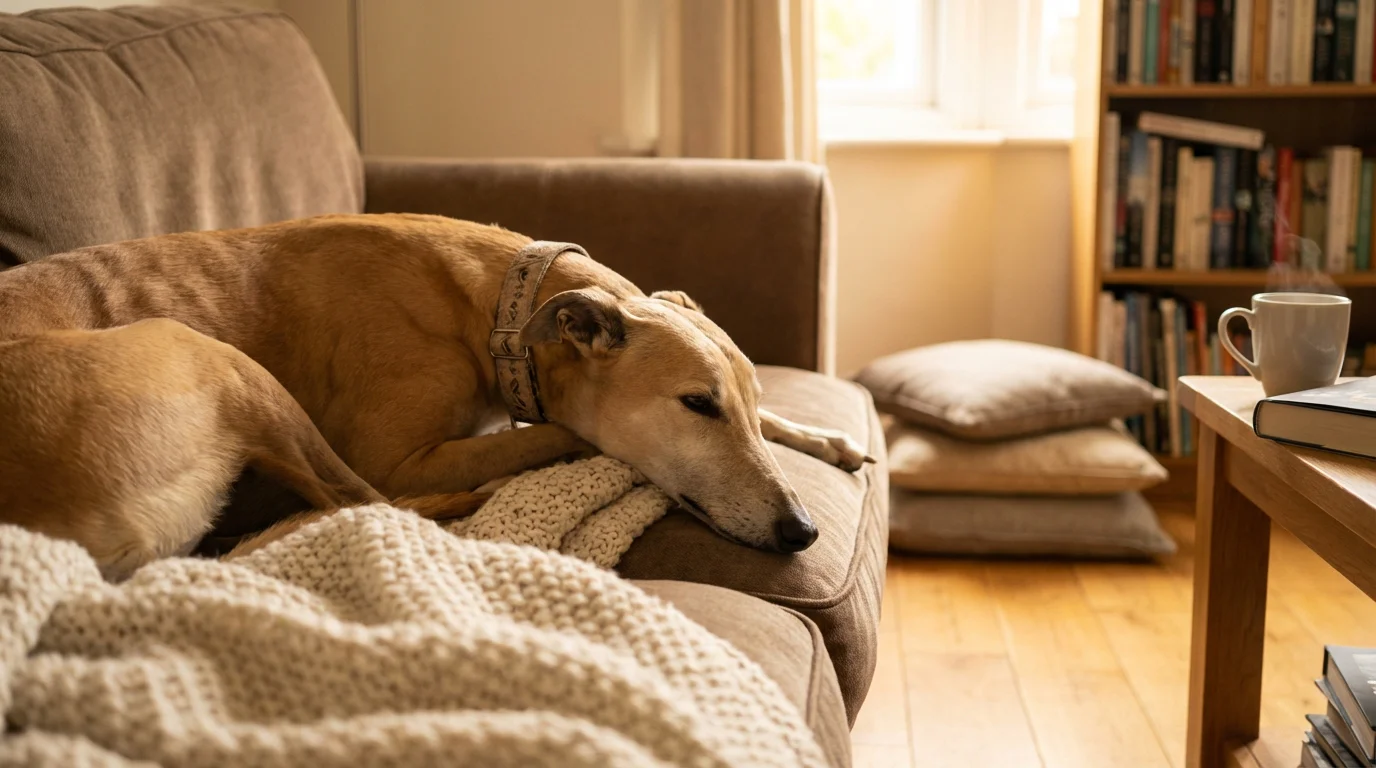
The good news is that greyhounds are remarkably well suited to life as pets. Despite their athletic careers, they are naturally calm, gentle animals that sleep for long stretches and adapt to domestic routines more readily than many other breeds. The nickname “forty-mile-an-hour couch potato” is well earned — a retired greyhound is typically content with two moderate walks per day and a comfortable spot on the sofa in between. Their temperament makes them excellent companions for families, couples, and single owners alike.
The welfare infrastructure supporting retired greyhounds has improved substantially over the past two decades. The GBGB, track operators, trainers, and a network of rehoming charities work together to ensure that dogs leaving racing have a clear pathway to a new home. The system is not perfect — some dogs take longer to place than others, and the demand for rehoming spaces fluctuates — but the trajectory is toward better outcomes for a higher proportion of retired racers.
For anyone involved in greyhound racing as a bettor, an owner, or a spectator, the welfare of retired dogs is not an abstract concern. These are the animals whose performances generate the sport’s entertainment value and its betting markets. How the sport treats them after their racing days is a direct reflection of its values.
GBGB Welfare Standards
The Greyhound Board of Great Britain operates a welfare framework that covers every stage of a racing greyhound’s life, from registration as a puppy through its racing career to retirement and rehoming. The standards are codified in the GBGB’s rules of racing and are enforced through regular inspections, reporting requirements, and disciplinary procedures for non-compliance.
During a greyhound’s racing career, welfare standards address kennelling conditions, veterinary care, training practices, and racing safety. Dogs must be kennelled in facilities that meet specified minimum standards for space, cleanliness, temperature, and ventilation. Veterinary inspections are conducted before and after racing, and any dog showing signs of injury, illness, or distress is withdrawn from competition. Track safety measures — sand depth, bend design, hare operation — are regulated to minimise the risk of racing injuries.
The injury reporting system requires all racing injuries to be recorded and reported to the GBGB, creating a dataset that allows the organisation to identify trends, assess track safety, and implement changes where injury rates are unacceptably high. This data-driven approach to safety management has produced measurable improvements in racing injury rates over recent years, though the sport acknowledges that injuries remain an inherent risk of competitive racing and that further progress is always the goal.
At retirement, the GBGB requires trainers to account for every dog that leaves their kennel. A dog cannot simply disappear from the system. Its destination — whether a rehoming organisation, a private home, or another trainer — must be recorded, and the GBGB tracks the outcomes to ensure that retired dogs are being placed responsibly. This traceability system was a significant step forward in welfare accountability, because it eliminated the possibility of dogs leaving the sport with no record of what happened to them.
Rehoming Schemes and Adoption
The rehoming network for retired greyhounds is one of the most extensive breed-specific adoption systems in the UK. It operates through a combination of GBGB-funded initiatives, independent charities, track-based rehoming programmes, and individual volunteers who foster and place dogs in permanent homes.
The Greyhound Trust is the largest rehoming charity in the sector, operating a network of branches across the UK that assess, prepare, and place retired racing greyhounds with adopters. The Trust works closely with the GBGB and with individual tracks to manage the flow of dogs from racing into rehoming, and its branches provide ongoing support to adopters through the transition period and beyond.
Track-based rehoming schemes are operated by individual stadiums, often in partnership with local charities or volunteer groups. These programmes have the advantage of proximity — the dogs are assessed at the track where they raced, and local adopters can visit, meet the dogs, and receive guidance from staff who know each animal’s personality and history. Some tracks maintain dedicated rehoming kennels on site, providing a transitional environment where retired dogs can begin their adjustment to domestic life before moving to a permanent home.
The adoption process typically involves an assessment of the prospective home — the living space, the presence of other pets, the availability of the adopter during the day — followed by an introduction between the dog and the family. Greyhounds vary in their suitability for different home environments: some are comfortable with cats and small dogs, while others retain a strong prey drive that makes them unsuitable for homes with smaller animals. The assessment process matches dogs with appropriate homes, which is essential for the long-term success of the placement.
The demand for retired greyhounds as pets has grown steadily, driven by increased public awareness of the breed’s suitability as companions and by the advocacy work of rehoming organisations. Waiting lists for adoption are common at many charities, and the public perception of greyhounds has shifted significantly from “racing animal” to “gentle family pet” over the past twenty years. This shift benefits the dogs, the sport, and the rehoming sector alike.
How the Sport Is Changing
The welfare conversation within UK greyhound racing has evolved substantially, and the sport in 2026 operates under a level of scrutiny and accountability that would have been unrecognisable a generation ago. The changes are driven partly by regulation, partly by public expectation, and partly by a genuine shift in attitudes within the sport itself.
Injury prevention has become a central focus. Track design modifications, investment in surface maintenance, and the analysis of injury data have contributed to a downward trend in serious racing injuries. The GBGB publishes injury statistics and retirement outcomes, providing transparency that allows the public and the media to assess the sport’s welfare performance against measurable standards.
Retirement outcomes have improved. The proportion of retired greyhounds that are successfully rehomed or placed in suitable environments has increased, and the GBGB’s traceability system means that the sport can demonstrate what happens to its dogs after they stop racing. This transparency is crucial for the sport’s social licence — the public’s willingness to accept greyhound racing as a legitimate entertainment depends in part on confidence that the animals are treated well throughout their lives, including after retirement.
Funding for welfare has increased. A levy on racing generates income that is directed toward the Greyhound Trust and other rehoming organisations, supplementing the charitable donations and volunteer efforts that have historically supported the rehoming sector. This structural funding provides greater stability for rehoming operations and allows them to plan capacity and services on a longer-term basis.
The sport is not free of welfare concerns, and critics continue to raise legitimate questions about injury rates, the volume of dogs entering the rehoming system, and the conditions at some training kennels. These criticisms are part of the accountability process, and the sport’s willingness to engage with them — through data publication, regulatory enforcement, and ongoing investment in welfare infrastructure — determines whether the trajectory of improvement continues.
Better Care, Better Sport
Welfare and sporting quality are not competing priorities. A sport that cares for its animals well is a sport that attracts better trainers, better owners, and a more committed public following. The tracks that invest in welfare standards attract the best kennels. The trainers who prioritise their dogs’ health produce the most consistent results. The owners who rehome their retired dogs responsibly are the ones who maintain their involvement in the sport over the long term.
For bettors, the welfare dimension may seem distant from the form book and the betting slip. But the health and condition of the dogs you are betting on is directly relevant to the reliability of the form data you are analysing. A well-managed dog, from a kennel with high welfare standards, is more likely to perform consistently than one from a kennel where shortcuts are taken. Welfare is not a sentimental consideration. It is a form indicator.
The sport endures because enough people care about it — as trainers, owners, bettors, and spectators — to sustain it through a century of change. The dogs deserve the same commitment. Better care produces better racing, and better racing sustains the sport for the next generation. That is not a slogan. It is the practical reality of how greyhound racing survives and improves.
