

In This Guide
Doncaster Dogs Results: Track Guide, Betting and Form Analysis
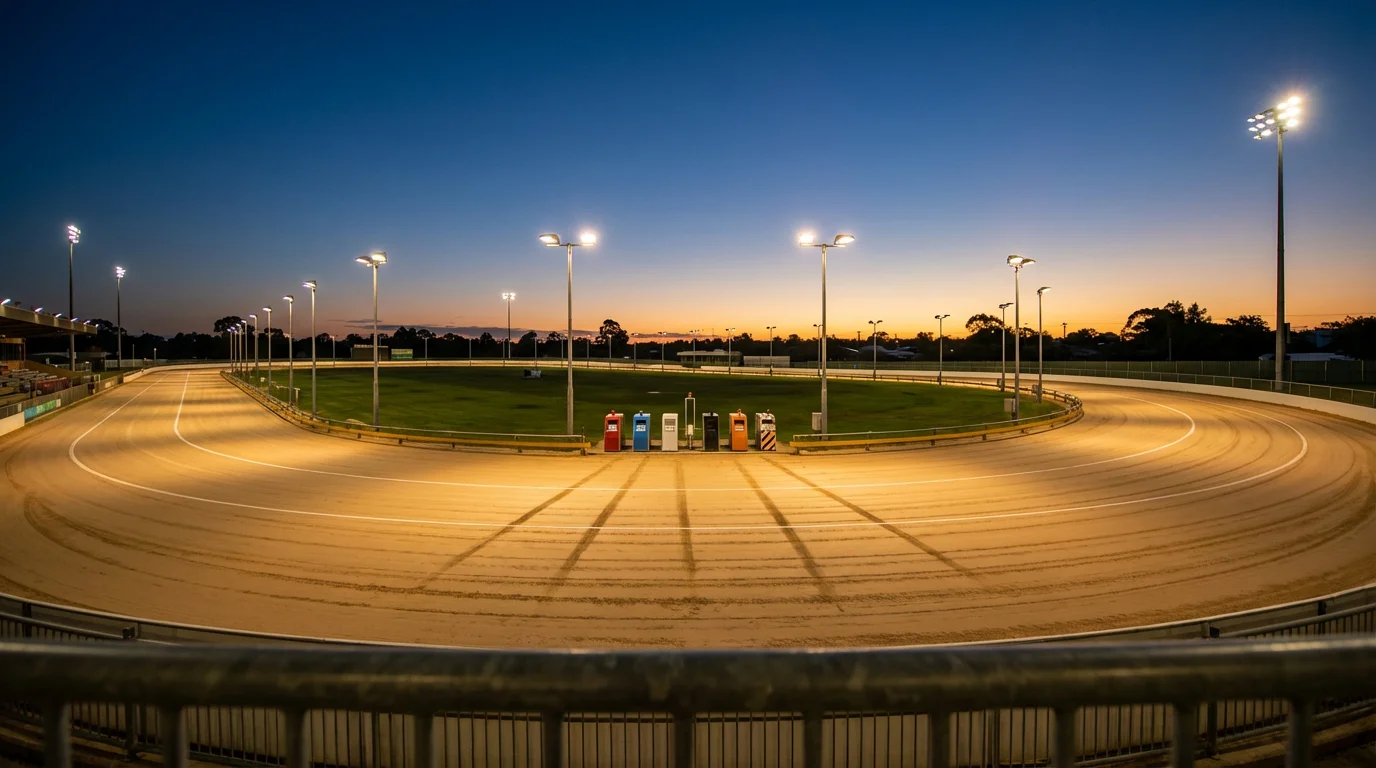
Doncaster Greyhound Stadium sits on Station Road in Stainforth, about seven miles from the town centre, rebuilt in 1993 on the site of a former independent greyhound track that had operated since 1941 before closing in 1978, after a businessman named Chick Hicken decided to invest £1.5 million in a new licensed stadium. Known locally as Meadow Court, the 438-metre circumference track runs four race distances from a 275-metre sprint to a demanding 705-metre marathon, with a 105-metre run-up to the first bend that gives fast breakers a genuine structural advantage. It is not the biggest venue on the GBGB circuit, but it might be the most underestimated.
This guide exists because Doncaster results tell a story that generic greyhound coverage misses entirely. The track's geometry, its sand surface, the seeding patterns used by the racing office, and the way the going shifts between a dry Monday afternoon and a wet Saturday evening all shape outcomes in ways that reward punters who pay attention to specifics rather than generalities. Whether you have been coming to Meadow Court for years or you are reading your first Doncaster racecard this week, the aim here is the same: to strip each element of a Doncaster result down to its working parts and show you how to use the data to make sharper betting decisions.
What follows covers the full loop. Track shape and how it influences race dynamics. The meaning behind every number on a result line. Trap draw and seeding. Bet types that suit six-runner fields. Form analysis tuned to Doncaster's characteristics. Grading, value identification, and the discipline it takes to bet responsibly across a busy racing week. Doncaster currently stages five meetings a week across Mondays, Wednesdays, Saturday mornings and evenings, and Sunday mornings, with 12 races on each card. That volume of racing generates a constant stream of data, and this guide is designed to help you read it.
Doncaster Greyhound Stadium at a Glance
- Location: Station Road, Stainforth, Doncaster DN7 5HS
- Also known as: Meadow Court Stadium
- Track circumference: 438 metres
- Race distances: 275m, 483m, 661m, 705m
- Surface: Sand
- Run-up to first bend: 105 metres
- Race days: Monday, Wednesday, Saturday (AM and PM), Sunday
- Races per meeting: 12
- Runners per race: 6
- Regulator: Greyhound Board of Great Britain (GBGB)
Interactive Tool
Track Distance Calculator, and CalcTm Comparison Tool
Work out how many laps each Doncaster distance really covers, and compare calculated times across different going conditions.
Laps Covered
-
-
Race Distance
-
Track Circumference
-
Remainder
-
What this guide states without connecting the dots: "the 438-metre circumference track runs four race distances" — 275m, 483m, 661m, and 705m — but the guide never states how many laps each distance actually covers. The standard 483m trip is 1.103 laps of the 438m circuit.
Faster Dog
-
-
Dog A CalcTm
-
Dog B CalcTm
-
Difference
-
What this guide gives as one fixed example: "A dog with a CalcTm of 29.95 on a +20 night was genuinely faster than a dog with a raw time of 29.90 on a -10 night, because the second dog's CalcTm would be 30.00." That single comparison is never turned into a reusable tool — this calculator applies the same logic to any two dogs.
The Track That Shapes the Results
Every Doncaster result starts 105 metres before the first bend. That number matters more than most punters realise. The run-up from the traps to the first turn is where positional battles are fought and frequently decided, and at Doncaster it is long enough to let a genuinely quick breaker establish daylight before the field hits the curve. Compare this to a track like Romford, where the run-up is significantly shorter and the first bend arrives before the field has fully separated. At Meadow Court, early pace is not just useful; it is embedded in the track's architecture.
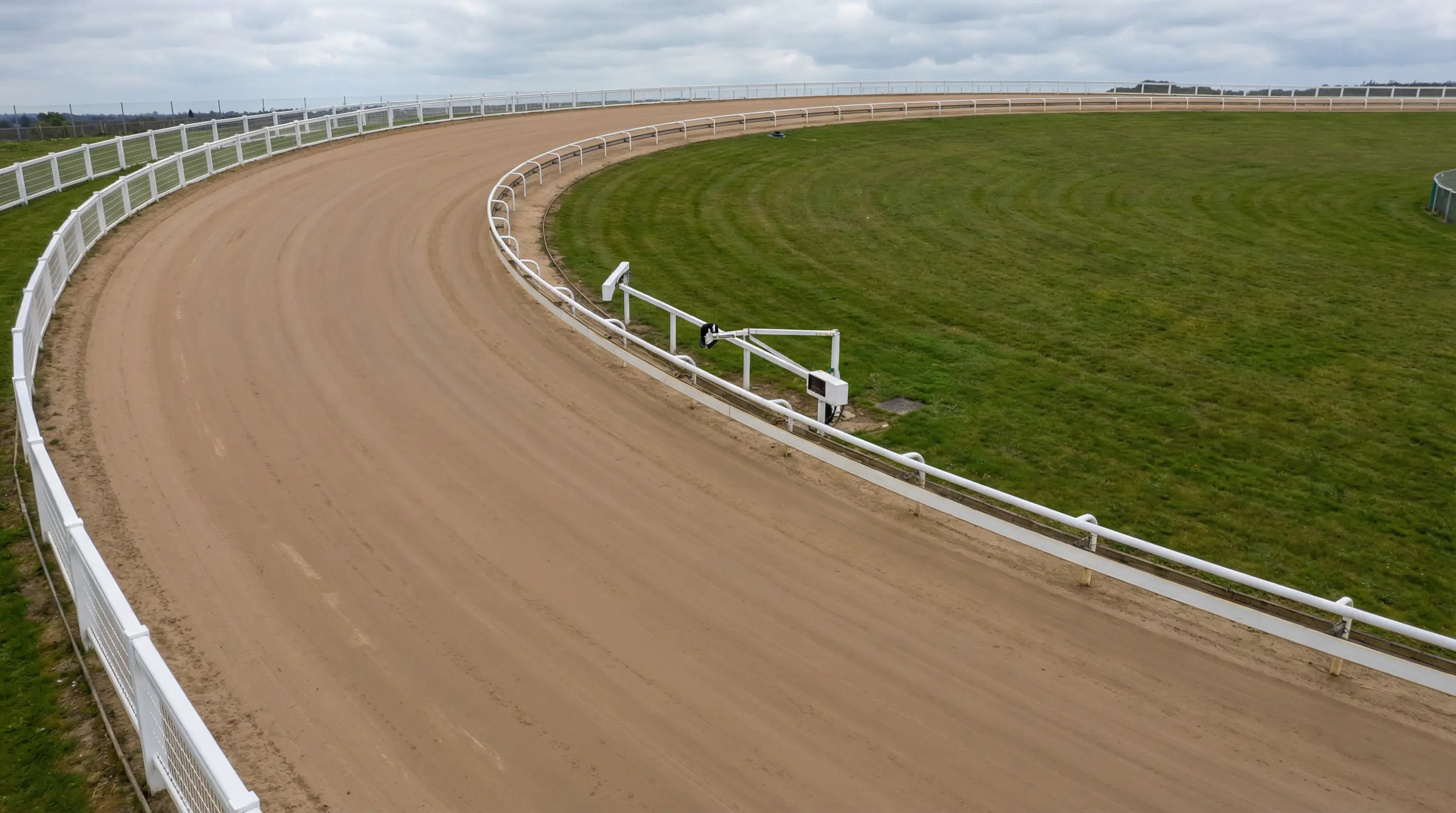
The circuit itself is a standard four-bend oval, but dimensions vary meaningfully from one UK track to another, and Doncaster's 438-metre circumference places it in the mid-range. The bends are moderately tight, which means dogs running wide lose more ground here than they would on a larger, more sweeping circuit. Rails runners benefit, particularly on the standard 483-metre trip where the field negotiates all four bends. A dog that clips the inside rail through the first two bends and holds position into the back straight is carrying less cumulative distance than a wide runner forced to cover extra metres on each turn.
The surface is sand, as it is at most GBGB-licensed tracks, and sand responds to weather in ways that directly affect race times. A dry, firm surface produces faster times and typically suits lighter, quicker dogs. When rain softens the going, times slow and the advantage can shift toward stronger, heavier animals with the stamina to push through heavier ground. Doncaster's going allowance, published before each meeting, quantifies this shift, and it is one of the most important numbers on any result line. We will come back to it.
The grandstand at Meadow Court offers a clear view of the first bend and the back straight, which is helpful if you want to assess how dogs handle the track in real time. But the real work happens before you arrive. Understanding that this track's geometry favours front-runners, that rails position matters more here than at wider venues, and that the sand surface introduces a variable that changes meeting to meeting is the foundation on which everything else in this guide is built.
Doncaster
- Circumference: 438m
- Run-up to first bend: 105m
- Surface: Sand
- Bends: Moderately tight
- Distances: 275m, 483m, 661m, 705m
- Runners: 6 per race
Typical UK Track
- Circumference: 400m-470m
- Run-up to first bend: 60m-130m
- Surface: Sand (most) or Chesil
- Bends: Varies widely
- Distances: 2-5 distance options
- Runners: 6 per race
Race Distances at Doncaster: 275m to 705m
Doncaster offers four race distances, each producing a different kind of race with different demands on the dogs and different implications for bettors.
The 275-metre sprint is the shortest distance on the card. It is a two-bend dash that starts on the back straight and finishes just past the winning line. There is barely time for a dog to recover from a slow break, which makes trap draw and early speed the dominant factors. Sprint results tend to be more predictable in one sense, as the fastest dog out of the traps usually wins, but more volatile in another, because a split-second stumble at the boxes can end a race before it starts. Punters looking at 275-metre races should focus almost entirely on break speed and recent sectional times to the first bend.
The 483-metre standard distance is the bread and butter of Doncaster racing, making up the bulk of any card. Four bends, a full lap, and enough ground for a race to develop through phases: break, first-bend position, back-straight challenge, and home-straight finish. This distance rewards all-round ability but still leans toward front-runners because of that 105-metre run-up. Dogs with early pace and the stamina to maintain it through four bends are the ones that post consistent form at this trip.
The 661-metre stayers' distance adds two further bends and fundamentally changes the race dynamic. Stamina becomes critical, and the advantage shifts slightly toward dogs that can finish strongly rather than simply break quickly. This is the distance used for the Yorkshire St Leger, Doncaster's flagship open race, and it tends to attract higher-quality fields when open events are staged. For bettors, 661-metre races require a different lens: look at bend positions from past runs to see whether a dog is still travelling at the fourth and fifth bends or fading.
The 705-metre marathon is rare on the card but worth understanding. It tests genuine stamina, and the field often strings out significantly by the time the leaders hit the home straight. Dogs bred for staying trips and trained specifically for this distance tend to dominate. Marathon results at Doncaster are a small sample, which makes form harder to assess, but when one appears on the card it often produces generous odds because the betting market has less data to work with.
Reading Doncaster Greyhound Results
A finishing time tells you almost nothing until you know what the going was. That is the single most important principle for anyone trying to interpret Doncaster greyhound results, and it is the one most casual bettors ignore. A dog posting 29.85 seconds for the 483-metre trip on a fast, dry evening is running to a completely different standard than one clocking 30.20 on heavy going, even though the raw difference is less than half a second. The result line contains the information you need to make that distinction, but only if you know where to look.
A typical Doncaster result line includes the dog's name, trap number, finishing position, finishing distances behind the winner, the winning time, the going allowance, the calculated time, the starting price, and abbreviated running comments. Each element serves a specific purpose, and none of them should be read in isolation.
The winning time is the clock time from traps to line for the first dog home. It tells you how fast the race was run on that particular surface on that particular day. The going allowance is the adjustment the track applies to account for surface conditions: it might read +10 (slow going, add 0.10 seconds to normalise), -5 (fast going, subtract 0.05), or N (normal, no adjustment). The calculated time, or CalcTm, is the result of applying the going allowance to the actual winning time, producing a normalised figure that allows you to compare performances across different meetings. The starting price (SP) shows the odds at which the dog went off, giving you a snapshot of how the on-course market assessed its chances. And the finishing distances, measured in lengths, tell you how close the race was and where each dog finished relative to the winner.
The running comments are shorthand codes that describe what happened during the race. SAw means slow away from the traps. Crd means the dog was crowded. EP denotes early pace. Bmp means bumped. RIs indicates the dog raced on the rails. These abbreviations are a compressed narrative of each dog's race, and over several runs they build a profile of how a dog behaves in traffic, whether it handles crowding, and how it responds to different trap positions.

Sample Doncaster Result Decoded
Race 4 — 483m Graded (A3) — Going: +10
1st: Trap 1, Ballymac Finn — Won by 2 lengths — Time: 30.12 — CalcTm: 30.02 — SP: 7/4
Reading: The winning time was 30.12 seconds, but the going was slow (+10), so the going allowance shaves 0.10 off to produce a calculated time of 30.02. That CalcTm is what you compare against other dogs' normalised times. The SP of 7/4 tells you the market had this dog as a clear favourite. The two-length winning margin suggests comfortable control rather than a tight finish.
Key insight: If you had only looked at the raw 30.12, you might have dismissed this run. The CalcTm of 30.02 puts it into sharper context: this was a solid A3 performance adjusted for conditions.
What Calculated Time Really Means
Calculated time exists to solve a specific problem: raw finishing times are meaningless without context. A dog racing on a dry, fast surface will always post quicker times than the same dog on heavy, rain-soaked sand. Without normalisation, you would have no reliable way to compare performances across different meetings or even different races on the same card if conditions changed between them.
The going allowance is set by the racing manager before the meeting based on trial runs and surface assessment. It is expressed in hundredths of a second and applied uniformly to every race at that meeting. If the going is +15, the surface is slow, and 0.15 seconds is subtracted from each winning time to produce the calculated time. If the going is -10, the surface is fast, and 0.10 is added. When the going is N, no adjustment is made and the CalcTm equals the raw time.
For punters, CalcTm is the great equaliser. When you are comparing two dogs that last raced at Doncaster on different nights, always compare their calculated times, not their raw finishing times. A dog with a CalcTm of 29.95 on a +20 night was genuinely faster than a dog with a raw time of 29.90 on a -10 night, because the second dog's CalcTm would be 30.00. This is particularly important at Doncaster, where five meetings a week means conditions can vary significantly from Monday to Sunday.
One additional nuance: CalcTm is track-specific. A calculated time of 29.90 at Doncaster does not mean the same thing as 29.90 at Monmore or Sheffield, because each track has different dimensions, bend tightness, and surface characteristics. CalcTm is a tool for comparing dogs at the same venue, not across venues. Comparing dogs from different tracks requires additional adjustment, and most experienced punters rely on race grades and finishing positions for cross-track comparison rather than raw or calculated times.
From the clock to the traps — where the race is won before it starts.
Trap Draw and Seeding at Doncaster
Trap one at Doncaster is an advantage — but only for the right kind of dog. The seeding system used at GBGB tracks assigns dogs to traps based on their running style, and understanding how this works at Doncaster specifically is one of the most practical edges a regular punter can develop.
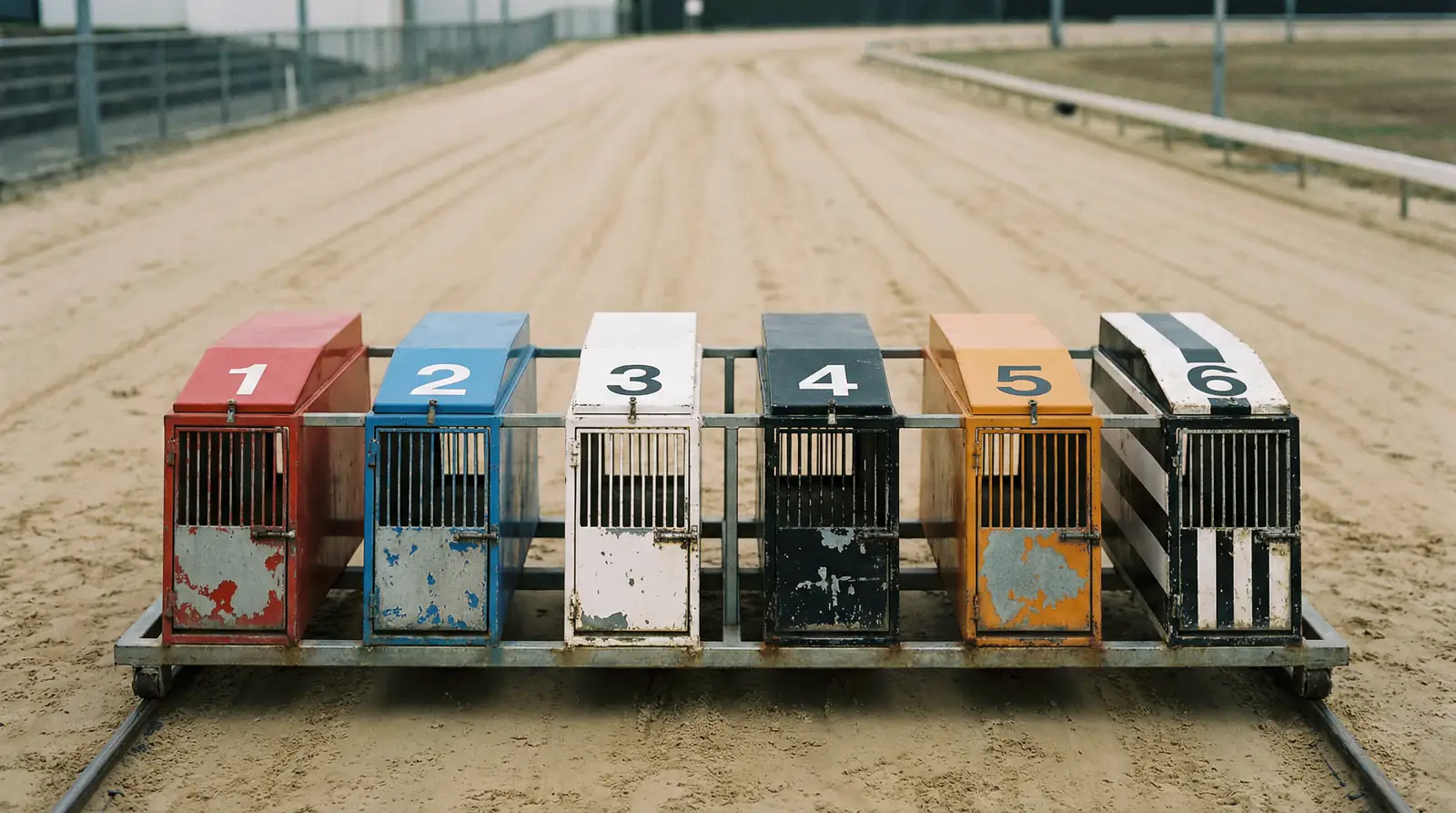
Greyhounds are seeded into three broad categories: rails runners, middle-seed dogs, and wide runners. Rails runners, typically assigned traps 1 and 2, are dogs that naturally hug the inside of the track through the bends. Middle-seed dogs, drawn in traps 3 and 4, tend to race in the centre of the pack and can go either way. Wide runners, slotted into traps 5 and 6, are dogs that drift outward through turns and need clear space on the outside to run their race. Racing jacket colours are assigned by GBGB Rule 118: red (trap 1), blue (2), white (3), black (4), orange (5), and white and black stripes (6).
At Doncaster, the 105-metre run-up amplifies the importance of the draw. A rails runner in trap 1 that breaks well can reach the first bend with a clear inside line, and once established on the rail there is very little reason to move off it. The tight bends punish dogs racing wide, so a confirmed rails runner in trap 1 who gets away cleanly is in an almost structurally ideal position. That is reflected in the statistics: across standard 483-metre graded races, trap 1 tends to produce a higher win percentage at Doncaster than the track average for all traps, though the effect is less pronounced in sprint and staying races where different dynamics come into play.
Conversely, trap 6 is not the graveyard some punters assume. A confirmed wide runner drawn in trap 6 has clear space on the outside and does not need to negotiate traffic to find a racing line. The disadvantage is the extra distance covered on bends, but for a dog with genuine early pace that can lead into the first bend from the outside, trap 6 can work well. The problem arises when a dog drawn wide is not a natural wide runner, or when a middle-seed dog ends up in trap 6 and gets caught between wanting to cut inside and being forced wide by the dog on its inner.
For bettors, the key is to match the dog's seeding profile to the trap it has drawn. Check recent form to see where the dog has been drawn previously and how it performed. A dog that won from trap 2 last week and is now in trap 5 is facing a fundamentally different race. The racing manager's seeding decisions are not always perfect, and when you spot a mismatch between a dog's natural running style and its trap assignment, that information is often not fully reflected in the odds.
Trap 1 — Red
Rails runner. Benefits from the shortest route to the first bend. Strongest advantage on the standard 483m trip. Look for dogs with confirmed inside running lines and clean break records.
Trap 2 — Blue
Rails or inner-middle seed. Still favours dogs that trend toward the rail. Slightly more exposed at the first bend than trap 1 but retains a good inside position through the turns.
Trap 3 — White
Middle seed. The most neutral trap. Dogs drawn here need tactical speed to find position before the bend. Can go either way depending on what breaks inside and outside of them.
Trap 4 — Black
Middle to wide seed. Often the trap where the market slightly underestimates dogs, particularly if the runner has the pace to cross toward the rail before the first bend.
Trap 5 — Orange
Wide-middle seed. Dogs here need to commit to a racing line early. The 105m run-up gives them time to establish position, but if they hesitate they can get boxed in behind faster breakers.
Trap 6 — White and Black Stripes
Wide runner. Clear outside path but longest route on bends. Best suited to dogs with strong early pace that can lead or sit second through the first turn without being forced wider still.
Bet Types That Work at the Dogs
You do not need exotic bets to make the dogs pay — but knowing them helps. Greyhound betting in the UK offers a range of options from the straightforward to the complex, and the six-runner field at Doncaster makes certain bet types more practical and more attractive than they would be in a horse race with fifteen runners.
The win bet is the simplest: pick the dog that crosses the line first. In a six-runner field, the probability baseline is higher than in most horse racing, which means favourites win more often but at shorter odds. Win betting at the dogs rewards discipline — backing dogs at the right price rather than backing every favourite. The place bet requires your selection to finish first or second. Place odds are shorter, but in a six-runner race where two out of six qualifies, place betting can be a sensible way to back a dog you rate highly but cannot trust to beat one specific rival.
Each way combines a win bet and a place bet in one stake. You effectively make two bets: one at win odds, one at a fraction of the win odds (typically one quarter for greyhound racing) for a place. If your dog wins, both parts pay. If it finishes second, only the place part returns. Each way betting is popular at the dogs because it provides insurance against narrow defeats, and in a six-runner field the place terms are reasonable.
Each Way Bet Example
| Selection | Odds | Stake | Returns |
|---|---|---|---|
| Trap 3 — Ballymac Finn | 7/2 | £5 each way (£10 total) | If wins: £31.88 (£22.50 win return + £9.38 place return). If 2nd: £9.38 (place return only; win stake lost) |
The trap challenge is a bet unique to greyhound racing in which you back a specific trap number to score the most points across all races on a card. Each trap earns points based on finishing position, and the trap with the highest cumulative total wins. It is an appealing bet for punters who want action across an entire meeting without studying every individual race, though it requires an understanding of how the seeding patterns on a particular card favour certain trap numbers.
Forecasts and Tricasts: Where the Value Sits
If there is one area where the greyhound betting market consistently offers better value than horse racing, it is forecast and tricast betting. The reason is structural: with only six runners, the number of possible finishing combinations is dramatically smaller than in a 12- or 16-runner horse race, which means informed punters can realistically narrow the field to a credible shortlist of likely outcomes.
A straight forecast requires you to name the first and second finishers in the correct order. A reverse forecast doubles your stake and covers both permutations: your two selections finishing first-second in either order. A combination forecast covers all possible orderings of three or more selections across first and second, with the stake multiplied accordingly. In a six-runner field, a straight forecast has 30 possible outcomes (6 x 5), a reverse forecast halves your risk on a specific pair, and a combination forecast across three dogs costs six units but covers all six possible first-second arrangements among your selections.
A tricast takes it further: name the first three finishers in exact order. There are 120 possible tricast outcomes in a six-dog race (6 x 5 x 4). A combination tricast with three selections covers all six orderings and costs six stakes. Tricast dividends are often substantial, regularly returning double or triple figures to a one-pound unit, and in races where there is a clear favourite but the places are open, a combination tricast covering the favourite with two or three outsiders can produce significant returns.
The practical edge for Doncaster regulars is local knowledge. If you know which dogs handle the track, which traps suit which runners, and how the going is likely to affect the order of finish, you are working with a smaller effective field than the six the racecard shows. Forecasts and tricasts convert that knowledge into payouts that single win bets simply cannot match.
Form Analysis for Doncaster Punters
Form is a language — and at Doncaster, the dialect has its own accent. The fundamentals of greyhound form reading apply everywhere, but the way they play out at Meadow Court is shaped by the track's specific characteristics. If you are going to study form seriously for Doncaster, you need to calibrate your reading to this venue rather than applying generic principles.
Start with recent form figures. A greyhound's racecard typically shows its last six runs, with finishing positions listed in chronological order. A sequence like 1-2-1-3-1-1 tells you this dog is consistent and competitive. A sequence like 5-1-6-2-4-1 tells you something more interesting: this dog is volatile, capable of winning but equally capable of finishing nowhere. For Doncaster, ask why the bad runs happened. Was the dog drawn in an unsuitable trap? Did it encounter trouble at the first bend? Was the going significantly different? The form figures are the starting point, not the conclusion.
Sectional times, where available, add a crucial layer. The split time to the first bend reveals whether a dog is an early-pace runner or a closer that picks up speed later. At Doncaster, with its long run-up, a fast split time is a reliable indicator of a dog that exploits the track's structural advantage for front-runners. Compare first-bend splits across a dog's recent runs to see whether it is consistently fast out of the boxes or whether its early speed is variable.
Weight trends are underrated. Dogs are weighed before each race, and the kennelling weight is published on the racecard. Under GBGB rules, a dog must not race if its weight varies by more than 1 kilogram above or below its previous racing weight. Small fluctuations are normal, but a dog that has gained weight steadily across three or four runs may be losing fitness, while a dog that has trimmed slightly might be in sharpening condition. This is not a standalone indicator, but combined with form figures and sectional times it adds a useful data point.
Trainer patterns are worth tracking at Doncaster because a significant proportion of runners come from local kennels that race at the track regularly. Trainers develop routines: some are known for placing dogs in specific grades to maximise confidence, others for targeting open races aggressively, and some for preparing dogs specifically for a step up in distance. Knowing which trainers have strong recent records at Doncaster, and which tend to bring their dogs in ready to race rather than needing a prep run, gives you an informational edge that bookmaker odds often underweight.
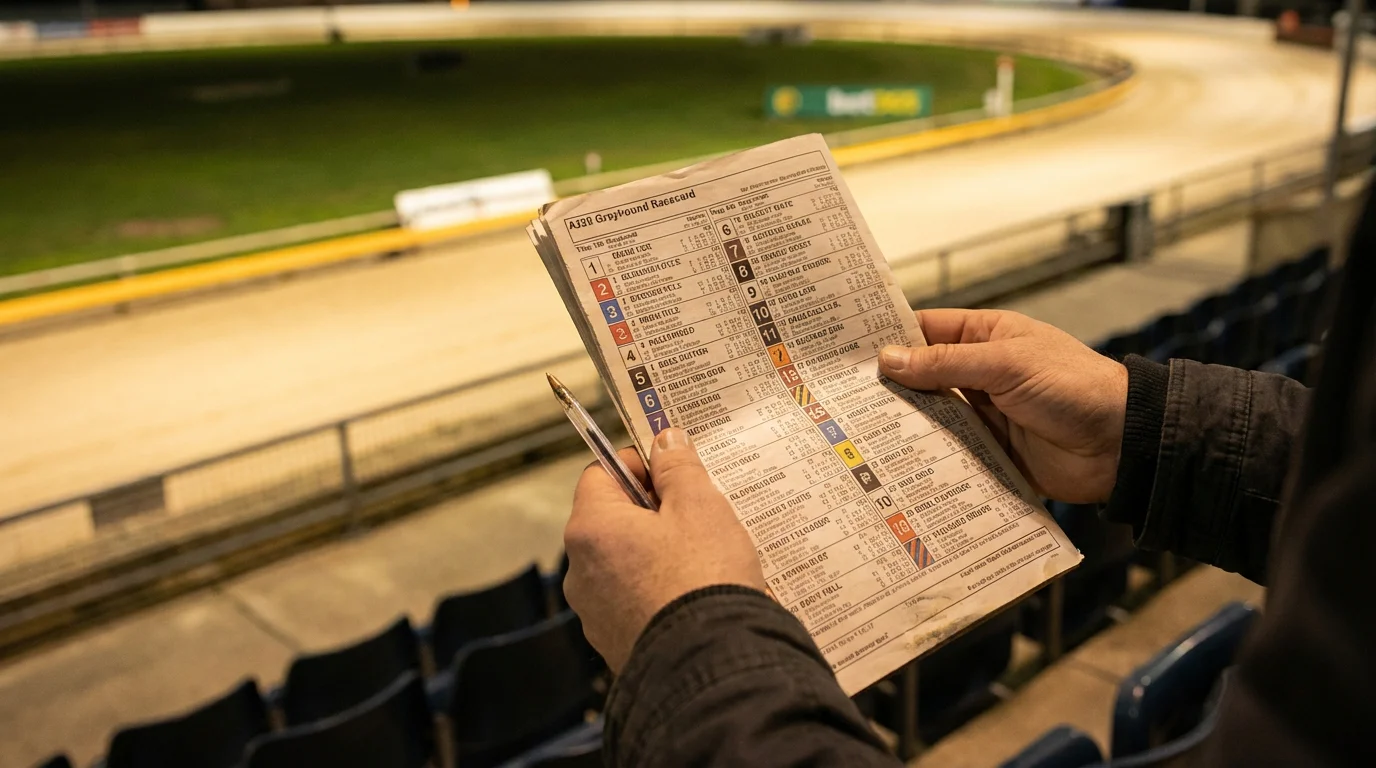
The dog that leads at the first bend at Doncaster wins roughly 60% of standard-distance races — a higher conversion rate than most UK tracks, directly attributable to the 105-metre run-up that lets front-runners establish a decisive lead before the first turn.
Early Pace vs Late Finish: What Doncaster Rewards
The statistical dominance of early-pace runners at Doncaster is not a fluke. It is a direct consequence of track design. The 105-metre run to the first bend is long enough to sort the field by speed before the first turn, and the moderately tight bends then compress the racing line in a way that benefits dogs already holding position on the inside. A dog that reaches the first bend in front at Doncaster has both the positional advantage and the physical advantage of running the shortest route through the turns.
On the standard 483-metre distance, this effect is most pronounced. The race covers all four bends, and a dog leading through the first two has enough track left to maintain momentum without needing exceptional stamina. The pattern holds in graded races across the middle grades — A2 through A5 — where the quality of fields is close enough that the structural advantage of early pace is often the deciding factor. In open races, where individual class differences are larger, a high-quality closer can occasionally reel in a moderate front-runner, but even at open level the first-bend leader wins more often than not at Doncaster.
The 661-metre and 705-metre distances change the equation. With two additional bends, the race becomes longer and the stamina demands increase. A dog that leads after four bends still has two more bends and a full straight to survive, and that is where closers with genuine staying power find opportunities. If you are betting on staying races at Doncaster, look for dogs that hold their bend positions through the fifth and sixth bends in their previous form. A dog that was third at the fourth bend and second at the sixth is a dog that finishes strongly, and over 661 metres or more that quality can overcome a slow start.
For sprint races at 275 metres, early pace is everything. There are only two bends, and the race is effectively over by the time the field exits the second turn. Sectional times to the first bend are the single most predictive piece of data in a 275-metre race, and if two dogs have comparable split times, the one drawn closer to the rail will usually have the edge.
How Doncaster Grades and Open Races Work
Grade A1 at Doncaster does not mean the same as A1 at Romford. The grading system in UK greyhound racing is administered locally by each track's racing manager, which means the standard of competition at a given grade varies from venue to venue. At Doncaster, grades run from A1 at the top down through A2, A3, A4, and so on, with S grades for sprints and M grades for middle-distance races. A dog that has been racing at A3 level at Sheffield may find itself in A4 or A2 at Doncaster depending on its calculated times relative to the local population of dogs.
This matters for bettors because dogs moving between tracks are frequently mispriced. A dog graded A4 at a strong track like Nottingham that transfers to Doncaster and receives an A3 or even A2 grade may look outclassed on paper but could be competitive on ability. Conversely, a dog that has been dominating A5 at a weaker track and gets upgraded upon arrival at Doncaster may face stiffer opposition than its form suggests. The grading number is relative, not absolute, and the savvy punter cross-references a dog's times and form with the specific standard of racing at the track where those results were achieved.
Open races sit above the graded structure and attract the best dogs from across the GBGB circuit. Doncaster's flagship open race is the Yorkshire St Leger, contested over the 661-metre stayers' trip and typically staged in the autumn. First run in 2004, the competition returned in 2023 after a three-year hiatus and has re-established itself as a highlight of the Doncaster calendar. The centenary year of British greyhound racing in 2026, celebrating 100 years since the first regulated race at Belle Vue in July 1926, has brought a heightened focus to the GBGB open race programme, with 50 Category One competitions and 27 Category Two events scheduled across the circuit.
For grading changes, keep an eye on dogs that have recently dropped in grade after one or two poor runs. A dog sliding from A2 to A3 because of a troubled run — crowded at the first bend, hampered in running — is not necessarily a weaker dog. It is a dog in a lower grade than its ability warrants, and that is precisely the kind of form opportunity that regular Doncaster punters can exploit before the market adjusts.
From the grading ladder to the odds board, every piece of the racecard tells part of the same story.
Finding Value in Doncaster Greyhound Odds
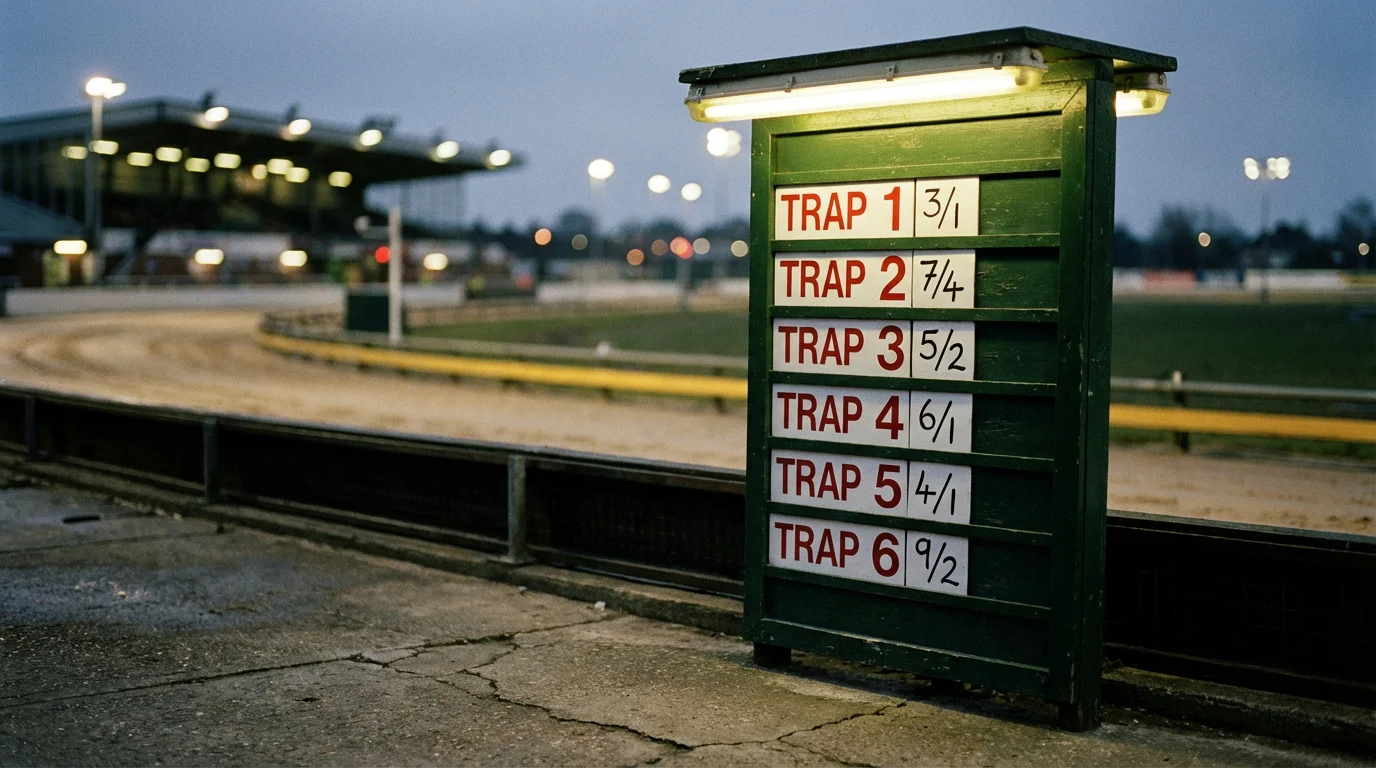
Value is not about backing longshots — it is about price versus probability. A dog at 8/1 that you assess has a genuine one-in-six chance of winning is not a value bet; a dog at 3/1 that you believe has a one-in-three chance is. The concept sounds simple, but applying it consistently at Doncaster requires understanding how greyhound odds are formed, when they shift, and where the market tends to get things wrong.
Greyhound odds are set very close to race time, which creates both challenges and opportunities. Unlike horse racing, where ante-post markets open days before a race and early prices are available hours in advance, the greyhound market comes together in the final minutes before the traps open. On-course bookmakers set their tissue based on the racecard and adjust according to where the money flows. Online bookmakers publish prices earlier, but these can move sharply as the off time approaches. For Doncaster punters, this means the price you see 20 minutes before a race may not be the price available when the traps open.
The starting price (SP) is the final on-course price at the off. If you back a dog at an early online price and the SP ends up shorter, you have captured value. If the SP drifts longer than your early price, you have overpaid. This is where Best Odds Guaranteed (BOG) becomes significant. Several major UK bookmakers offer BOG on greyhound racing, which means if you take an early price and the SP is higher, you receive the better odds. Under the GBGB Rules of Racing, effective from 1 January 2026, on-course market integrity measures continue to apply, but for the off-course punter the practical takeaway is straightforward: BOG eliminates the downside of betting early.
Look for value in specific situations. Dogs dropping in grade after excusable poor runs, as discussed in the grading section, are frequently underbet because the market reacts to the most recent result rather than the underlying ability. Dogs returning from a break of two or three weeks with a recent trial time can be overlooked if the trial was not visible in the racecard form. And in forecast and tricast markets, the value multiplies when you can confidently eliminate one or two dogs from contention, effectively turning a six-dog race into a four-dog race for the purposes of your bet.
Odds at greyhound tracks are set minutes before the race. If you want to lock in a price, bet early with a BOG bookmaker. That way, if the SP drifts, you get the higher price; if it shortens, you keep your original odds. In a fast-moving market, BOG is the closest thing to a free edge.
Betting Responsibly at the Dogs
The dogs run five meetings a week — your bankroll does not need to keep up. Doncaster's schedule generates 60 races per week, and if you add in the RPGTV and SIS coverage that brings other tracks into your living room, the temptation to bet on virtually every race is constant. The punters who maintain long-term discipline are the ones who treat each bet as a deliberate decision rather than a reaction to the next available race.
Set a session budget before you open the racecard. Decide how much you are willing to lose in a single meeting, and treat that figure as a hard limit. If you reach it, stop. The races will be there tomorrow. Chasing losses across a 12-race card is the single most reliable way to turn a losing day into a catastrophic one, and it is a pattern that becomes easier to fall into the more frequently you bet. Doncaster's meeting density makes this especially important: the gap between a Monday afternoon card and a Wednesday afternoon card is short enough that the temptation to recover Monday's losses on Wednesday feels rational in the moment, even when it is not.
Record keeping is not glamorous, but it is essential. Log every bet: the selection, the odds, the stake, the outcome, and the profit or loss. Over time, this record reveals patterns that pure memory cannot — which bet types you are profitable on, which grades of race you tend to misjudge, whether you perform better on certain days of the week. Professional punters treat their betting log as a business ledger, and there is no reason recreational bettors should not do the same, even at a smaller scale.
If you feel that your betting is becoming difficult to control, support is available. The GamStop self-exclusion scheme allows you to block yourself from all UK-licensed online gambling sites for a period of your choosing. GambleAware provides information and resources for anyone concerned about their gambling. These services are confidential, free, and designed specifically for situations where stepping back is the right thing to do.
Pre-Bet Checklist
- Set your budget for this session and commit to it
- Check the racecard: distance, grade, going, trap draw
- Compare odds across at least two bookmakers
- Review recent form, sectional times, and weight
- Confirm your bet type and stake before placing
- Log the bet: selection, odds, stake, and outcome
FAQ: Doncaster Dogs Results and Betting
What are the race distances and race days at Doncaster Greyhound Stadium?
Doncaster Greyhound Stadium offers four race distances: 275 metres (sprint), 483 metres (standard), 661 metres (stayers), and 705 metres (marathon). The track currently holds meetings on Mondays and Wednesdays (first race at 14:33), Saturday mornings (first race at 10:41), Saturday evenings (first race at 18:11), and Sundays (first race at 10:32). Each meeting consists of 12 races with six runners per race. The schedule can be confirmed on the official Doncaster Greyhound Stadium website or via the GBGB calendar.
How do I read sectional times and calculated times in Doncaster results?
Sectional times measure how quickly a dog reaches specific points on the track, most commonly the first bend. A fast sectional to the first bend indicates early pace, which is a strong predictor of success at Doncaster due to the track's 105-metre run-up. Calculated time (CalcTm) is the winning time adjusted for the going allowance: if the going is +10 (slow surface), the CalcTm is 0.10 seconds less than the actual winning time, normalising the performance to standard conditions. Always compare CalcTm rather than raw times when assessing dogs across different Doncaster meetings, as surface conditions can vary significantly from day to day.
Which bet types offer the best value for regular Doncaster punters?
Forecast and tricast bets tend to offer the strongest value for punters with local knowledge of Doncaster. With only six runners per race, the number of possible outcomes is manageable, which means informed punters can realistically narrow the field. A reverse forecast covering your top two selections in either finishing order is a practical middle ground between a single win bet and a more speculative tricast. Each way betting is also effective at Doncaster, particularly on dogs at odds of 3/1 or higher, because the place terms in a six-runner field (typically one-quarter odds for first or second) provide meaningful insurance. For those wanting action across a full meeting, the trap challenge bet offers engagement without requiring race-by-race analysis.
The Last Bend: Why Doncaster Dogs Keep Drawing You Back
There is something about the sound of the traps opening at Meadow Court. It is not the loudest stadium on the circuit, and it is certainly not the most famous. But Doncaster has a quality that bigger tracks sometimes lack: consistency. The meetings come around with the regularity of a working week, the racing office seeds the cards with care, and the six-dog fields produce races that are readable without being predictable. For punters who value rhythm and patterns over spectacle, this track rewards attention in a way that feels proportionate to the effort you put in.
This guide has covered the mechanical elements: track geometry, race distances, result interpretation, trap draws, bet types, form analysis, grading, odds, and discipline. But the thing that keeps regulars coming back to Doncaster is not the mechanics. It is the satisfaction of reading a race correctly — of seeing a dog's form line, understanding what the trap draw means at this specific track, watching the traps open, and knowing before the field hits the first bend that your assessment was right. That does not happen every time. It does not happen most of the time. But when it does, it is a feeling that no result line can fully capture.
Doncaster greyhound racing enters its next chapter during a landmark year for the sport. British greyhound racing celebrates its centenary in 2026, marking 100 years since the first regulated race at Belle Vue, Manchester, on 24 July 1926. The GBGB has scheduled events and commemorations throughout the year, including an inaugural Track of the Year award and a gala dinner at Dunstall Park on the anniversary itself. For a track like Doncaster — community-rooted, independently operated, racing five days a week — the centenary is both a celebration and a reminder that this sport has endured because it gives people something that bigger, louder forms of entertainment do not always manage: a reason to study, to think, and to come back next week.
