

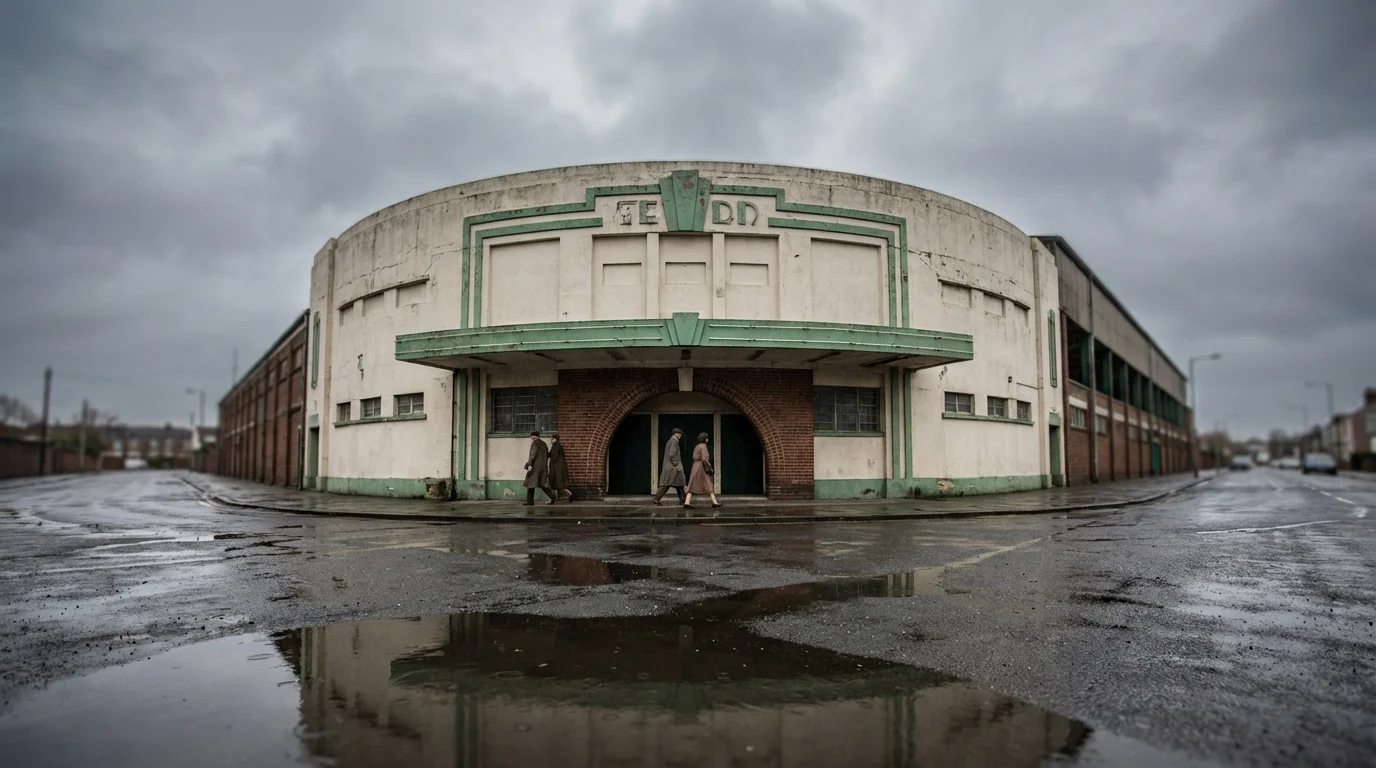
Belle Vue 1926: Where It All Began
The first official greyhound race meeting in Great Britain took place at Belle Vue Stadium in Manchester on 24 July 1926. A crowd of roughly 1,700 watched six dogs chase a mechanical hare around an oval track, and a sport was born. The concept had been imported from the United States, where the mechanical lure had been patented a few years earlier, but it was in Britain — with its deep appetite for betting and its tradition of working-class spectator sport — that greyhound racing found its natural home.
The Belle Vue experiment was an immediate commercial success. Within weeks, the crowds multiplied. Within months, promoters across the country were licensing the mechanical hare technology and building or converting stadiums to accommodate greyhound racing. By the end of 1927, more than forty tracks had opened in England alone, and the sport was drawing attendances that rivalled football in some industrial cities. The speed of the expansion reflected the pent-up demand for affordable, accessible evening entertainment in a country where the working week was long and leisure options were limited.
The early tracks were concentrated in the industrial heartlands — Manchester, London, Birmingham, Glasgow, Sheffield — where dense urban populations provided ready-made audiences. The formula was simple and effective: six dogs, a mechanical lure, a sand track, and a tote for betting. The races were short, the meetings were regular, and the admission prices were low enough to attract families and factory workers alongside dedicated gamblers. Greyhound racing was democratic in a way that horse racing, with its class-stratified enclosures and rural locations, was not.
The tote was integral from the start. Unlike horse racing, where bookmakers dominated the betting landscape, greyhound racing adopted the totalisator system as its primary betting mechanism from the outset. The tote pools gave the sport a self-funding financial model — a percentage of every bet flowed back to the track operator — and created the betting infrastructure that sustains the sport to this day.
From Belle Vue, greyhound racing spread with a velocity that surprised even its promoters. The sport had found its audience, its format, and its commercial logic in a single summer. Everything that followed — the boom years, the regulation, the decline, the survival — grew from those first six dogs chasing a mechanical hare around a Manchester stadium on a summer evening a century ago.
The Golden Era: Working-Class Entertainment
The period from the late 1920s through the 1960s represents the golden era of British greyhound racing. At its peak, the sport attracted annual attendances in the tens of millions and operated at over seventy licensed tracks across the country. Saturday evening at the dogs was a fixture of working-class social life — an event that combined entertainment, community, and the tangible excitement of having a financial stake in the outcome.
The popularity was driven by accessibility. Greyhound meetings ran in the evening, after the working day ended, at stadiums located in or near urban centres. You did not need to travel to the countryside, take a day off work, or dress in morning suits. You turned up after tea, paid a modest admission, and spent the evening watching fast dogs and placing small bets. The social dimension was as important as the racing itself — the dog track was a meeting place, a venue for courtship, and a communal space that cut across the rigid social boundaries of mid-century Britain.
The sport’s cultural footprint during this period extended well beyond the track. Greyhound racing featured in films, novels, and popular music. Owning a racing greyhound was a realistic aspiration for ordinary people — unlike racehorses, greyhounds were affordable to buy and keep, and the sport’s structure allowed small-scale owners to compete alongside larger operations. The result was a participatory culture where the audience was also, in many cases, the ownership base.
Betting was central to the experience, and the tote pools at major meetings handled volumes of money that were enormous relative to average wages. The dog track was, for many people, their primary contact with organised gambling — a weekly ritual that predated the legalisation of off-course betting shops and that operated within a regulated framework at a time when much other gambling was technically illegal.
The golden era was not without its problems. Unregulated tracks — known as flapping tracks — operated alongside the licensed venues, sometimes with questionable standards of animal welfare and race integrity. The contrast between the well-run licensed stadiums and the less scrupulous independent operations was a source of tension within the sport and contributed to the regulatory reforms that would follow.
The Betting and Gaming Act 1960
The Betting and Gaming Act 1960 transformed the landscape of British gambling and had profound consequences for greyhound racing. The Act legalised off-course cash betting for the first time, permitting the establishment of licensed betting shops on the high street. Before 1960, placing a cash bet away from a racecourse was illegal, which meant that the dog track was one of the few places where ordinary people could bet legally. After 1960, that monopoly was broken.
The opening of betting shops did not kill greyhound racing, but it fundamentally changed the sport’s economic model. The exclusivity of the on-course betting experience — the fact that you had to attend the track to have a legal bet — had been one of the primary drivers of attendance. With betting shops on every high street offering odds on greyhound races and horse races alike, the incentive to travel to the track diminished. Attendances began a slow, sustained decline that would continue for decades.
The Act also introduced new regulatory requirements for the sport, including stricter licensing conditions for tracks and enhanced oversight of betting operations. These reforms improved standards at licensed tracks but added costs that squeezed the margins of smaller operations. The combination of falling attendances, rising regulatory costs, and competition from betting shops created the financial pressures that would lead to the first wave of track closures in the following decades.
What the 1960 Act did not change was the fundamental appeal of the sport itself. Dogs still raced, punters still studied the form, and the thrill of watching six greyhounds sprint around a floodlit track remained undiminished. The challenge was that the business model — dependent on gate receipts and on-course tote turnover — was no longer viable at the scale the sport had enjoyed during the golden era.
Decline and Survival: Track Closures
The second half of the twentieth century was defined by contraction. Track after track closed its gates as attendances fell, land values rose, and the commercial case for maintaining a greyhound stadium weakened against the temptation of selling the site for property development. London, which had once hosted more than thirty greyhound tracks, lost them steadily — Hackney, Catford, Wimbledon, Walthamstow — each closure removing another thread from the fabric of the sport.
The causes were cumulative rather than singular. Betting shops drained the on-course market. Television brought entertainment into the home. Changing social habits reduced the appetite for regular evening outings. The cost of maintaining facilities to modern standards increased. And the value of the land on which tracks sat — typically large plots in urban locations — made the financial logic of development irresistible for owners weighing a declining entertainment business against a one-off property windfall.
The closures were not uniform. Some regions lost tracks more rapidly than others, and the sport’s geography shifted toward a smaller number of surviving venues concentrated in specific areas. The tracks that endured were generally those with secure land ownership, strong local followings, and management that invested in modernisation to attract a new generation of racegoers alongside the loyal regulars.
The emotional impact of the closures went beyond economics. Each track carried the memories of its community — decades of Friday evenings, favourite dogs, memorable finishes, and the collective experience of watching racing together. When a track closed, those memories lost their physical anchor. The community dispersed. Some regulars followed the sport to other venues. Many simply stopped going.
Yet the sport survived. Reduced, restructured, and stripped of the scale it once enjoyed, greyhound racing entered the twenty-first century with a smaller but committed base of tracks, trainers, owners, and punters who refused to let it disappear.
Modern Era: GBGB and the Sport Today
The Greyhound Board of Great Britain was established in 2009, replacing both the British Greyhound Racing Board and the National Greyhound Racing Club as the sport’s single regulatory body. GBGB oversees licensed greyhound racing in the UK, setting the rules of racing, administering the grading system, enforcing welfare standards, and working to promote the sport to a new audience.
The modern era of greyhound racing is defined by a smaller footprint but a sharper focus on quality, welfare, and accessibility. The surviving licensed tracks operate to higher standards than at any point in the sport’s history, with improved veterinary care, stronger welfare protocols, and investment in facilities for both dogs and racegoers. The GBGB’s regulatory framework addresses issues — retirement and rehoming, injury reporting, kennel inspections — that earlier eras of the sport neglected.
Technology has reshaped how punters interact with the sport. Online betting, live streaming, and digital form databases have made greyhound racing accessible to anyone with an internet connection, removing the geographic barrier that once limited the sport’s audience to those living within reach of a track. A punter in Cornwall can study the Doncaster racecard, watch the races live, and place bets with the same information and access as someone sitting in the grandstand.
The challenge for the modern sport is growth. Attracting new racegoers, new owners, and new bettors in a crowded entertainment market requires the sport to communicate its appeal — the speed, the drama, the analytical depth — to people who may never have considered attending a greyhound meeting. The sport’s history is its foundation, but its future depends on its ability to evolve while retaining the essential qualities that have sustained it for a century.
