

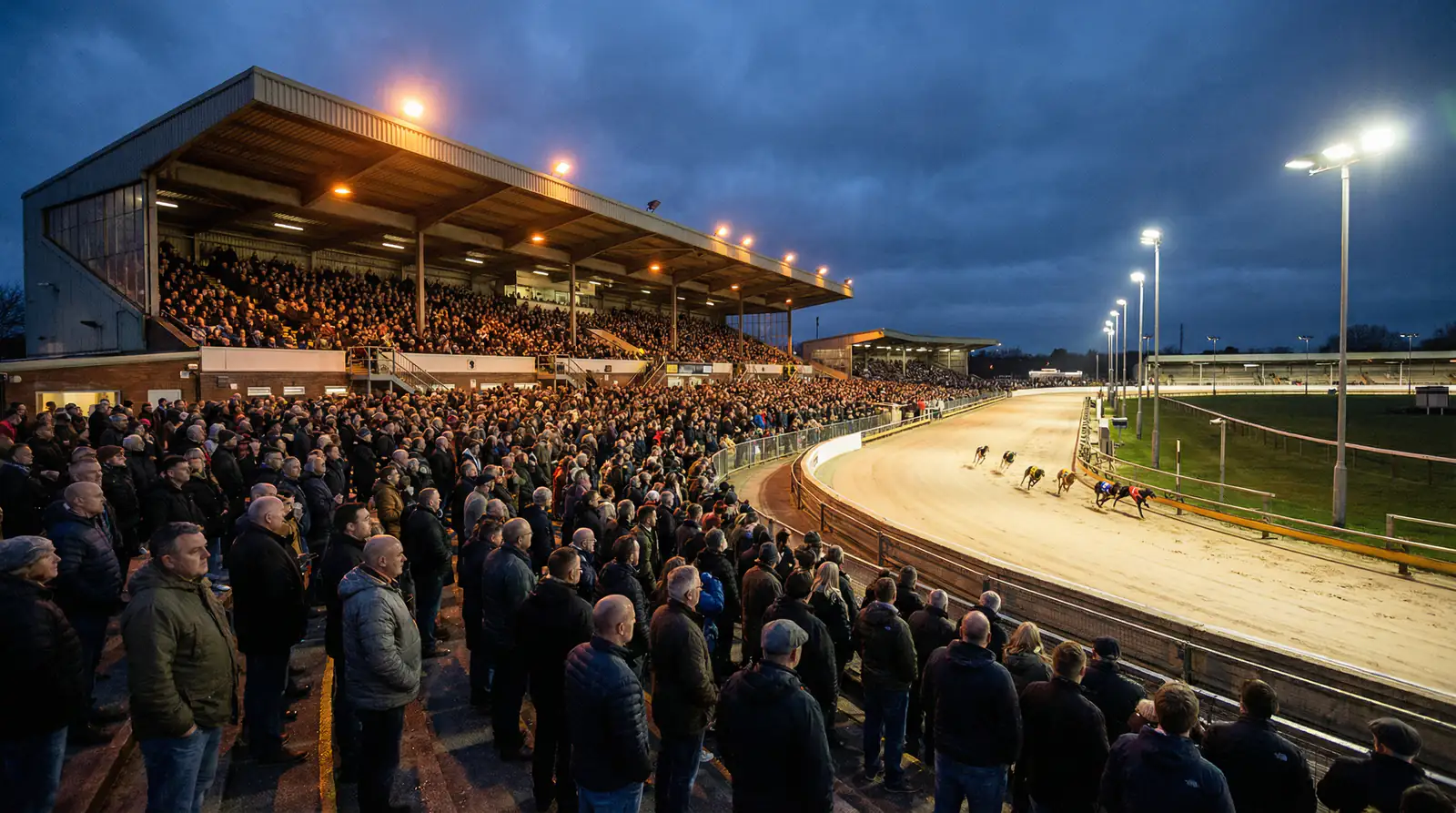
The UK Greyhound Racing Season
Unlike horse racing, which has distinct flat and jump seasons, UK greyhound racing operates year-round without a break. Licensed tracks stage meetings throughout the calendar, from the first week of January to the last week of December. There is no off-season, no closed period, and no pause for holidays. The greyhounds run every day of the year across the country’s network of licensed stadiums.
This continuous calendar means that the concept of a “season” in greyhound racing is defined not by the overall racing schedule but by the competition calendar — the major events, feature races, and championship competitions that punctuate the year. These events follow a broadly consistent annual pattern, with the spring and summer months hosting the most prestigious open-race competitions and the autumn and winter months featuring a mix of track-specific events and the later rounds of stayers competitions.
For punters, the year-round schedule is both an opportunity and a discipline challenge. There is always racing available, which means there is always a bet to be had. The punters who thrive are those who treat the calendar selectively — focusing on meetings and events where they have an analytical edge — rather than betting on every card simply because it exists. The volume of racing is a resource, not an obligation.
The major events draw the best fields and generate the most betting interest, which means the markets are deeper and more liquid. Between these events, the weekly graded meetings at each track provide the steady rhythm of data and opportunity that makes greyhound racing unique among betting sports. No other discipline offers this combination of frequent, data-rich competitions at every level from novice to elite.
Category 1 Events: Derby, Oaks, St Leger
Category 1 events are the pinnacle of UK greyhound racing. They carry the highest prize money, attract the strongest fields, and generate the most media coverage and betting interest. There are approximately sixty Category 1 competitions staged each year, spread across the country’s leading tracks, and they form the backbone of the sport’s prestige calendar.
The English Greyhound Derby is the single most important event on the calendar. First held at White City Stadium in 1927, the Derby moved to Wimbledon in 1985 and is now staged at Towcester. Run over 500 metres, it attracts the best middle-distance greyhounds from across the UK and Ireland. The competition runs through multiple rounds — heats, quarter-finals, semi-finals, and a six-dog final — and the entire process can span several weeks. The ante-post market opens months in advance, and the final attracts the largest television audience and the heaviest betting turnover of any greyhound event.
The Greyhound Oaks is the premier competition for female greyhounds, offering bitches their own championship event at a similar distance and prestige level to the Derby. The Oaks draws a different section of the greyhound population and produces its own set of champions, and the ante-post market is active among punters who follow female form closely.
The St Leger is the sport’s classic stayers competition, run over six bends. It tests stamina and pacing ability alongside speed, and the form lines often diverge from those of the Derby because the distance demands different qualities. The St Leger attracts specialists — dogs bred and trained for longer distances — and the betting market rewards punters with knowledge of stayers form that the general public may lack.
Other prominent Category 1 events include the Cesarewitch (a long-distance championship), the Puppy Derby (restricted to young dogs), and a series of track-specific Category 1 competitions hosted at leading venues throughout the year. Each carries significant prize money and requires qualification through earlier rounds, creating the multi-week competitive arcs that generate the richest ante-post markets.
The timing of Category 1 events follows a rough seasonal pattern. The Derby and Oaks are typically staged in the summer months, the St Leger in autumn, and the Cesarewitch in the spring. Track-specific Category 1 events are distributed throughout the year, ensuring that there is almost always a major competition in progress or approaching at any point in the calendar.
Category 2 and 3 Competitions
Below the Category 1 tier, Category 2 and Category 3 competitions provide a secondary layer of prestigious racing that fills the calendar between the flagship events. These competitions carry meaningful prize money and attract strong fields, though the depth and breadth of entries are typically less than at Category 1 level.
Category 2 events often serve as preparatory competitions for Category 1 entries. A dog might contest a Category 2 event over 480 metres in April as a stepping stone toward the Derby in June, using the lower-tier competition to sharpen its race fitness and provide form evidence for the connections’ decision about whether to enter the bigger event. For bettors, these preparatory races offer valuable information about which dogs are being targeted at the elite competitions — and how they are performing in the build-up.
Category 3 events and unclassified open races are the broadest tier, encompassing track-specific opens, regional championships, and feature competitions that provide competitive racing above the graded level without reaching the national significance of the top two tiers. These events are staged frequently across UK tracks and offer excellent betting opportunities, because the fields are strong enough to be competitive but the public attention is lower than at Category 1 and 2 level, which can leave the markets less efficient.
The full calendar of Category 2 and 3 events is published by the GBGB and by the individual tracks that host them. Monitoring this calendar is useful for bettors who want to follow specific dogs or trainers through the competition season, because the progression from lower-tier opens to Category 1 events reveals which connections are building toward a tilt at the major prizes.
Track-Specific Feature Events
Every licensed greyhound track stages its own programme of feature events alongside the nationally classified Category 1, 2, and 3 competitions. These track-specific events — derby nights, anniversary meetings, memorial competitions named after notable figures in the track’s history — provide the local racing calendar with highlights that draw larger-than-usual crowds and generate stronger betting interest.
At Doncaster, the racing calendar includes feature events at the stayers distance, taking advantage of the track’s 661-metre trip and its reputation as a venue where distance runners thrive. The Yorkshire St Leger is the most prominent, but the track also stages other feature competitions throughout the year that attract strong stayers entries from across the region.
Track-specific features are worth following for bettors because they often attract dogs from outside the track’s regular population. Trainers enter their best dogs for the enhanced prize money and prestige, which means the fields can include runners whose form was built at other venues. These cross-track entries create the form comparison challenges — and opportunities — that make feature events analytically interesting.
The atmosphere at feature meetings is different from a standard midweek card. The crowds are larger, the on-course betting market is more active, and the quality of the racing is noticeably higher. For punters who attend meetings in person, feature nights offer the best combination of competitive racing and a vibrant trackside experience. For those betting online, the feature events typically receive enhanced coverage through live streaming and pre-race analysis that is not available for routine meetings.
Mark Your Calendar: Key Dates for Punters
The greyhound racing calendar does not require the same kind of seasonal planning that horse racing demands, because the year-round schedule provides constant opportunities. But the major events follow a predictable annual rhythm, and knowing when they fall allows you to prepare your ante-post positions, follow the qualification rounds, and engage with the competitions that generate the most betting value.
Spring brings the early-season Category 1 events and the opening of ante-post markets for the summer championships. This is the time to begin tracking the dogs that are likely to feature in the Derby, Oaks, and other mid-year highlights. Trial results, early-round performances, and kennel form in the spring months provide the raw material for ante-post assessment.
Summer is the peak of the competition calendar. The Derby, the Oaks, and several other Category 1 events are staged during this period, and the concentration of elite racing creates the deepest and most active betting markets of the year. The form produced during the summer months is the highest standard available, and the data from these competitions informs graded assessments for months afterwards.
Autumn features the St Leger and the distance championships, shifting the focus from middle-distance specialists to stayers and marathon runners. The changing weather begins to affect track conditions, and the going transitions that characterise the autumn months reward punters who pay attention to surface preferences.
Winter is the quietest period for major events but remains busy with graded racing and lower-tier opens. The shorter days and colder conditions produce slower going and longer times, and the form book from this period needs to be interpreted with the season’s impact on track conditions firmly in mind. For disciplined punters, winter is a period of steady, patient accumulation — maintaining the betting routine, building the form database, and waiting for the calendar to cycle back to the spring competitions.
