

Graded Races: The Bread and Butter
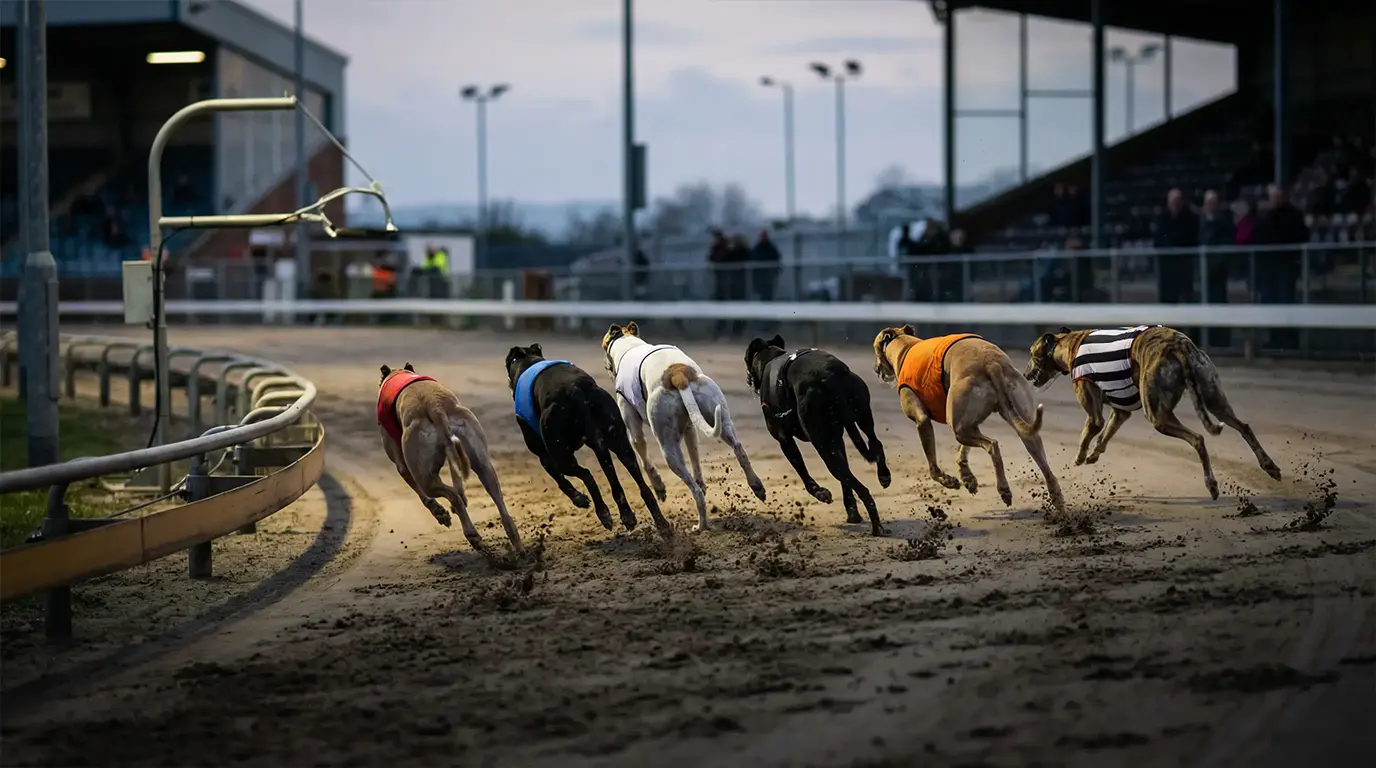
Graded races make up the vast majority of UK greyhound racing and form the backbone of every meeting’s card. They are the standard competitive framework, designed to match dogs of similar ability against each other over a given distance. When you look at a typical evening card of twelve races, ten of them will be graded contests.
Each graded race is assigned a letter-number code: the letter indicates the distance category and the number indicates the quality tier. An A4 race is a middle-distance contest at grade four level. A D2 race is a sprint at grade two — near the top of the sprinting pyramid at that track. The grading system is track-specific, so the quality associated with each number varies between venues, but the principle is consistent everywhere: lower numbers mean faster dogs.
For bettors, graded races offer the most reliable form lines. The dogs race regularly at the same track over the same distances, producing the kind of consistent data that allows genuine comparative analysis. The grading system itself ensures that fields are competitive, which means the form book is tested at every meeting. A dog winning at A4 is beating other A4 dogs, which tells you something specific and useful about its ability level.
The betting markets for graded races tend to be well-formed and efficient, reflecting the amount of public information available. Finding value requires digging into the specifics — draw, going, weight trends, sectional times — rather than relying on headline form. But the volume of graded racing means there are opportunities on every card for punters who do the work.
Open Races: Category 1, 2, and 3
Open races exist outside the grading system. They are invitation-based competitions that bring together the best dogs from across the country, and they represent the highest level of competitive greyhound racing in the UK. Open races are where the sport produces its champions, its biggest prize money, and its most memorable finishes. GBGB-licensed tracks across the country stage these events throughout the year.
The classification system for open races runs across three tiers. Category 1 events are the pinnacle — the English Greyhound Derby at Towcester, the St Leger, the Oaks, and roughly sixty other flagship competitions staged annually. These events carry the largest purses and attract the strongest fields. Category 2 events sit one tier below, offering strong competition and significant prize money but without the prestige of the Category 1 calendar. Category 3 events and unclassified open races complete the pyramid, serving as stepping stones for dogs working their way toward the top tier.
Betting on open races requires a different mindset than graded contests. The dogs are drawn from multiple tracks, making direct form comparison harder. A dog graded A1 at Doncaster might meet an A1 dog from Nottingham, and the grades do not tell you which is the better animal because the grading standards differ between venues. You need to rely more heavily on times, adjusted for track and going, and on expert assessment of which dogs are peaking at the right moment in the competition schedule.
The ante-post markets for Category 1 events open weeks or months before the final, and the early prices often represent the best value available. By the time the semi-finals are run and the finalists are known, the market has priced in most of the available information. Getting involved early — with the understanding that your dog may not reach the final — is where the sharpest returns are found, provided you can absorb the risk of a losing bet if the dog is eliminated along the way.
Open racing is the glamour end of the sport, but it is also the most volatile for bettors. The fields are stronger, the form is harder to assess, and the margins between the dogs are thinner than in graded company. Approach open races with respect for the difficulty and a willingness to accept that surprises are more frequent when every dog in the field is capable of winning.
Handicap Races: Head Starts and Tactics
Handicap greyhound races operate on a different principle from graded or open contests. Instead of matching dogs of similar ability against each other, handicaps give slower dogs a head start in metres over faster ones. The aim is to produce a finish where all six dogs cross the line at roughly the same time, making every race a genuine contest regardless of the ability range within the field.
The head starts are calculated by the handicapper at each track based on the dogs’ recent form and racing times. A dog with faster calculated times might start several metres behind a slower rival. The size of the handicap varies — typically between two and twelve metres — and is published on the racecard alongside the dog’s normal form data.
For bettors, handicaps introduce a layer of complexity that does not exist in graded racing. You are not simply assessing which dog is fastest. You are assessing whether the handicapper has set the correct head start — and whether any dog in the field is better or worse than the handicap implies. A dog that has recently improved but whose handicap rating has not yet caught up is effectively running off an old mark, which gives it a real advantage. Conversely, a dog whose form has dipped since the handicap was assessed is carrying a burden that may be too severe.
Handicap races tend to produce closer finishes and more unpredictable results than graded contests, which makes them attractive for forecast and tricast punters. The compressed finishing order creates more permutations where mid-priced dogs fill the frame, and the dividends for correct forecasts can be generous. The trade-off is that the increased unpredictability makes selection harder, and the strike rate for any systematic approach is likely to be lower than in graded racing.
Puppy and Novice Races
Puppy races are restricted to young greyhounds, typically under two years of age, though the exact age cut-off can vary by competition. These races serve as the entry point to competitive racing, giving young dogs experience of the track, the traps, and the pressure of competition before they graduate into graded company.
The form for puppy races is inherently limited. The dogs have few, if any, prior runs to assess, and their racing characteristics — early pace, running line, stamina — are still developing. This makes puppy races among the hardest to bet on, because the usual analytical tools rely on a body of form data that simply does not exist for dogs at this stage of their careers.
What you can assess in puppy races is trial form, breeding, and trainer reputation. Some trainers are known for introducing well-prepared puppies that perform immediately. Others bring puppies to the track for the experience, with no immediate expectation of winning. Breeding offers clues about likely aptitude — a puppy from a sprint sire line running over a sprint distance has a logical fit, while a puppy from stayer bloodlines contesting a sprint is an experiment.
Novice races serve a similar purpose for dogs with limited racing experience, regardless of age. A dog that has had fewer than a specified number of career starts — the threshold varies by track — qualifies for novice events, which tend to be more competitive than puppy races because the dogs are slightly more experienced. The betting markets for novice races are better informed, because the dogs have at least some form to evaluate, but the data remains thin compared to graded company.
Both race types can produce value for bettors willing to invest the research time. Because public information is scarce, the odds are less efficient than in well-documented graded races. A punter who watches the trials, knows the kennels, and follows the trainers who consistently produce winning debutants can find prices that overestimate the chances of the unknown quantities in the field.
Hurdle Races: A Dying Art?
Hurdle racing involves greyhounds jumping small obstacles on the track rather than running a flat course. It was once a common feature of UK greyhound cards, offering a variation that tested agility and bravery alongside speed. In 2026, hurdle races are extremely rare. The number of tracks that stage them has dwindled, and the pool of dogs trained for hurdle racing has shrunk accordingly.
The decline is partly practical — the hurdles require additional infrastructure and present higher injury risk — and partly a reflection of changing tastes. The betting public has gravitated toward flat racing, and the kennels have followed. A trainer with twenty dogs in the kennel is more likely to focus on the flat grades that run every week than to specialise in hurdle racing that features on a handful of cards per year.
For the rare hurdle meeting that does appear on the calendar, the form book is thin and the market is inefficient. These are niche events for specialist dogs and specialist punters.
Matching Race Type to Betting Approach
Each race type demands a different analytical emphasis. Graded races reward thorough form study, going analysis, and trap draw assessment. Open races demand cross-track comparison, timing analysis, and respect for the higher standard of competition. Handicaps require attention to the handicapper’s marks and whether they lag behind the dog’s current ability. Puppy and novice races push you toward trial form, breeding, and trainer patterns rather than the racecard data that dominates in graded company.
The mistake is treating all races the same. The punter who applies the same method to an A4 graded race and a Category 1 open semi-final is using the wrong approach for at least one of those races. Identify the race type first, then select the analytical framework that fits.
