

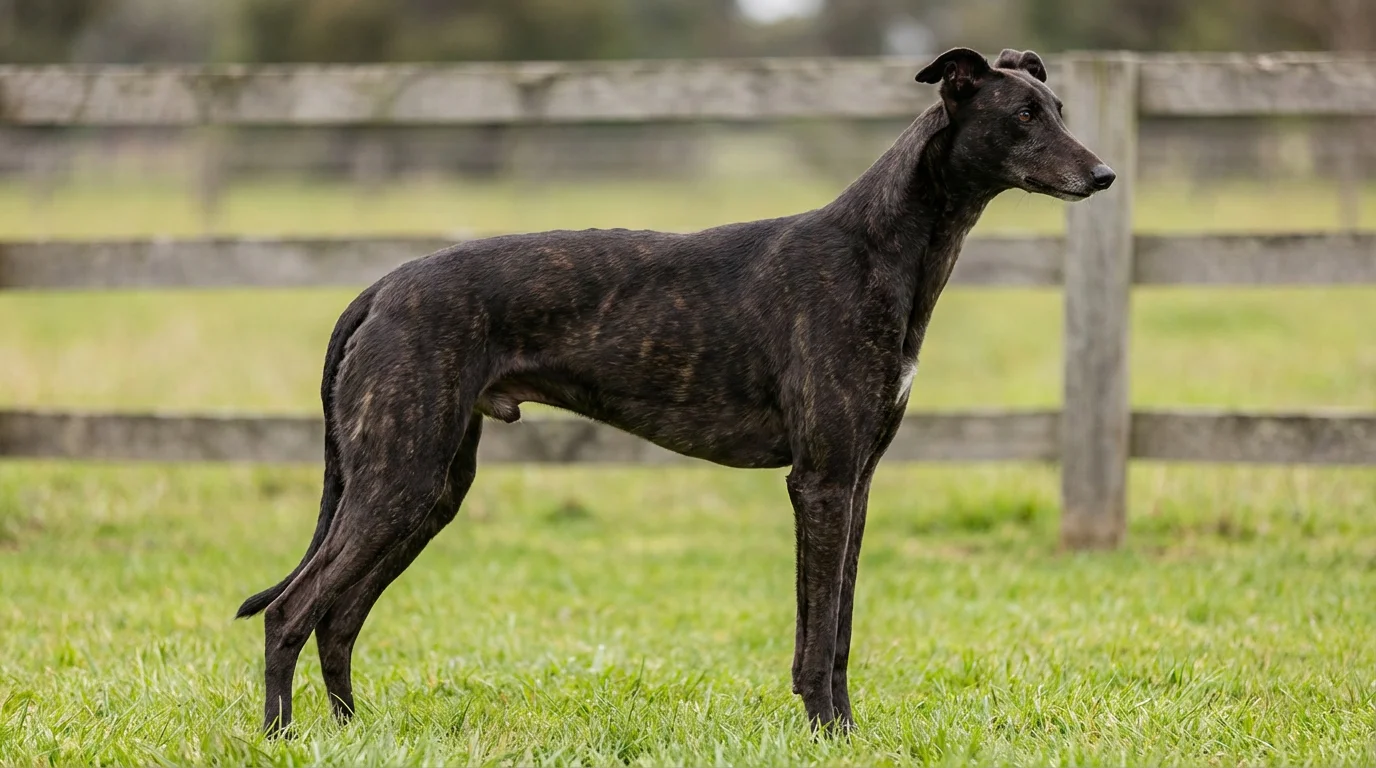
How Breeding Shapes a Racing Greyhound
Every racing greyhound is the product of deliberate breeding decisions made years before it ever enters a trap. The sire and dam were selected for specific qualities — speed, stamina, temperament, physical conformation — and the offspring inherits a genetic blueprint that influences everything from its running style to the distances it will excel at. Breeding does not guarantee outcomes, but it sets the range of possibilities. A dog bred from two sprint champions is not going to become a stayers specialist, any more than a child of two sprinters is likely to excel at the marathon.
The greyhound breeding industry is concentrated in Ireland and the UK, with a smaller number of breeding operations in Australia and the United States. Irish-bred greyhounds dominate UK racing, reflecting the scale and expertise of the Irish breeding sector. The best sires command significant stud fees, and their progeny are tracked closely by trainers, owners, and bettors who understand that bloodline quality is the foundation on which racing careers are built.
The physical attributes that breeding influences are measurable: height, weight, muscle composition, bone density, lung capacity. But breeding also shapes less visible qualities that are equally important on the track. Temperament in the traps — whether a dog is calm and focused or anxious and distracted — runs in families. Racing intelligence — the ability to find space, avoid trouble, and make tactical adjustments during a race — is partly innate and partly learned, but the capacity to learn is itself heritable. A dog from a line known for intelligent, tactical racing is more likely to display those qualities than one from a line characterised by raw speed with no racing brain.
For bettors, the practical value of breeding information varies depending on the stage of a dog’s career. For established runners with twenty or thirty races on their form card, the breeding is background — the form itself tells you everything you need to know about what the dog does on the track. For young dogs, debutants, and dogs switching distances, breeding becomes a primary indicator. When the form book is thin, the pedigree is the best available guide to what the dog might do next.
Breeding is not destiny. Environmental factors — training, management, injury history, nutrition — modify the genetic potential in every direction. But it is the starting point, and ignoring it means ignoring the single most informative piece of data available for a dog with limited racing history.
Sire and Dam: What the Bloodline Reveals
A greyhound’s pedigree is expressed as a combination of its sire (father) and dam (mother). The sire’s influence is the more widely tracked of the two, because successful sires produce hundreds of offspring across many litters, creating a statistical sample large enough to reveal genuine patterns. A sire whose progeny win disproportionately at sprint distances is a sprint sire. One whose offspring excel over 660 metres or more is a stayer sire. These designations are not guesswork — they are derived from the race records of dozens or hundreds of offspring.
The dominant sires in any era produce offspring that share recognisable traits. Their progeny tend to show similar running styles, similar physical builds, and similar distance preferences. When you see a dog by a familiar sire listed on the racecard, you have an immediate frame of reference: you know what the sire line typically produces, and you can assess whether the dog in front of you fits that template or deviates from it.
The dam line is less well tracked statistically, because each dam produces fewer offspring than a sire — a brood bitch might have three or four litters in her breeding career, producing perhaps twenty to thirty pups. But the dam’s influence on offspring quality is substantial. A well-bred dam mated to a top sire produces offspring with a higher probability of racing ability than the same sire mated to an unproven dam. The dam contributes half the genetic material, and serious breeders select their dams as carefully as their sires.
For betting purposes, the sire line is the more immediately useful reference. The large sample sizes allow meaningful statistical analysis: what percentage of Sire X’s offspring win at sprint distances? What is their average calculated time over 480 metres? How do they perform on heavy going? These are answerable questions for any sire with a significant number of racing offspring, and the answers provide a baseline expectation for any new offspring that enters the racing population.
The dam’s pedigree is more useful when you can trace it. If a dam has produced previous racing offspring, their records provide a direct comparison point for the new runner. A dam whose first three offspring all showed strong early pace is likely producing a fourth with similar characteristics. The sample is small, but it is specific to the individual dam and therefore more predictive for her offspring than the broader sire-line statistics.
Sprint Lines vs Stayer Lines
The most practical division in greyhound pedigree analysis is between sprint bloodlines and stayer bloodlines. These categories reflect genuine genetic differences in muscle fibre composition, cardiovascular capacity, and the neurological traits that influence running style — and they have direct implications for how a dog should be assessed when it appears on the racecard.
Sprint-bred greyhounds typically inherit fast-twitch muscle fibres that produce explosive acceleration and high top speed over short distances. They tend to be physically compact, with powerful hindquarters and a low centre of gravity. Their racing style favours front-running — break fast, lead early, maintain speed to the line. The best sprint pedigrees produce dogs that are devastating over 275 metres but may lack the sustained pace to compete effectively over 480 metres or more.
Stayer-bred greyhounds tend toward a taller, leaner physique with a higher proportion of slow-twitch muscle fibres that support endurance. They are built for sustained effort rather than explosive pace, and their racing style often involves settling into a rhythm through the early bends before accelerating in the closing stages. The best stayer pedigrees produce dogs that look ordinary over sprint distances but come into their own as the race distance increases beyond 600 metres.
Middle-distance racing — the 450 to 550 metre range that constitutes the bulk of UK graded races — draws from both bloodline pools. Some of the best middle-distance dogs carry sprint speed tempered by enough stamina to sustain it over four bends. Others come from stayer lines but possess enough early pace to avoid trouble at the first bend. The middle-distance form book is where the two bloodline categories overlap, and pedigree analysis alone is less decisive at this distance than at the sprint or stayers extremes.
When a dog bred from a strong sprint line is entered in a stayers race — perhaps because the trainer is experimenting with distance — the pedigree suggests caution. The dog may have the speed to lead through the first four bends but is genetically predisposed to fade when the stamina demands increase in the final third of the race. Conversely, a stayer-bred dog entered in a sprint is likely to be outpaced in the opening two bends and will not have enough race left to deploy the stamina that is its primary asset.
Using Pedigree Data in Betting
Pedigree data is most valuable in three specific betting scenarios: debutants, distance switches, and going changes. In each case, the form book provides insufficient evidence on its own, and the breeding offers a secondary data source that can tip the analysis.
For debutants — dogs with no racing form — the pedigree is the primary analytical tool. A debutant by a proven sprint sire from a dam whose previous offspring all showed early pace is a strong candidate for a front-running performance in a sprint race. The price on such a dog may be generous because the public has no form to evaluate, while the breeding provides a clear indication of likely racing style.
For distance switches, the pedigree tells you whether the move is likely to suit. A dog stepping up from 480 metres to 660 metres is asking a new question of its stamina. If its sire line is associated with stayers and its dam has produced other dogs that handled longer distances well, the step up is logical. If the pedigree screams sprint, the step up is speculative regardless of how good the form looks at the shorter distance.
For going changes, certain bloodlines produce offspring that handle heavy going better than others. This is partly a function of physical build — the muscular dogs from power-oriented sire lines tend to cope better with energy-sapping surfaces — and partly hereditary in ways that are harder to measure. If a sire’s offspring consistently outperform on slow going relative to their form on fast surfaces, that tendency is worth noting when the rain arrives and the going report turns adverse.
Blood Tells — But Only Part of the Story
Breeding provides the raw material. Training, management, health, and circumstance shape the finished product. The finest pedigree in the sport cannot compensate for poor training, chronic injury, or a series of unlucky draws. And the most modest pedigree can produce an exceptional racer if the training is right and the dog has the temperament to compete.
The punter who uses breeding data well treats it as one input among several — a piece of the puzzle that is most valuable when other pieces are missing. For established dogs with deep form records, the pedigree is context. For dogs at the start of their careers or at turning points in their racing lives, the pedigree is closer to evidence. Knowing when to lean on it and when to look past it is the difference between using breeding data intelligently and being seduced by a famous sire name on the racecard.
Blood tells. But it does not tell everything, and the punter who listens to it selectively — at the right moments, for the right questions — gets more from it than the one who treats it as gospel or ignores it entirely.
